
The Complete Guide to Mimosa hostilis (Mimosa tenuiflora) Root Bark as a Natural Dye
Natural dyeing has experienced a major resurgence as textile artists, woodworkers, and eco-conscious craftspeople move away from synthetic, petroleum-derived colorants. Among the vast botanical library of natural colorants, Mimosa hostilis root bark botanically classified as Mimosa tenuiflora stands out as one of the most vibrant and lightfast sources of deep pinks, rich purples, dark maroons, and earthy terra-cotta tones.
Historically revered across South and Central America, this remarkable tree has a long lineage of traditional applications. Understanding the botanical background, chemical dye mechanics, and proper application methods allows craftspeople to unlock the full spectrum of colors hidden within the root bark.
1. Botanical Profile and Cultural History
Mimosa tenuiflora (syn. Mimosa hostilis) is a perennial leguminous tree native to the semi-arid biomes of South America (specifically the Caatinga region of Brazil, where it is known as Jurema Preta) and Central America (particularly southern Mexico, where it is known as Tepezcohuite).
Family:       Fabaceae (Legume family)
Genus:        Mimosa
Species:      M. tenuiflora (syn. M. hostilis)
Common Names: Jurema Preta, Tepezcohuite, Mimosa Root Bark
Habitat:      Semi-arid regions, dry thorn scrublands
In its native habitats, the tree plays a crucial ecological role as a nitrogen-fixing pioneer plant, enriching nutrient-poor soils and preventing erosion.
Culturally, indigenous populations have utilized different parts of the Mimosa hostilis tree for centuries:
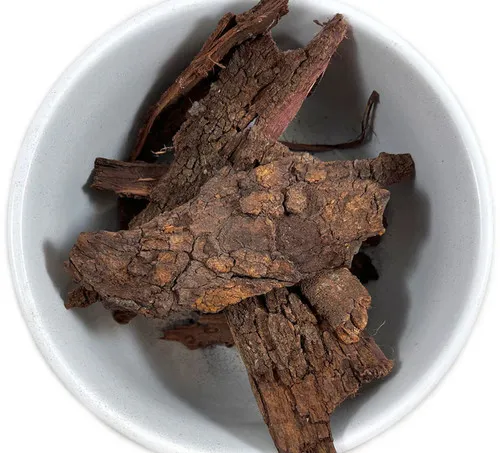
- Textiles and Fibers: Bark extracts were traditionally boiled to produce durable, fade-resistant dyes for clothing, baskets, and fishing nets.
- Leather Tanning: High natural tannin concentrations in the bark made it an effective natural agent for curing and preserving animal hides.
- Skincare & Topical Application: In Mexican ethnobotanical tradition, powdered bark (Tepezcohuite) was applied topically to minor burns and skin irritations due to its astringent properties.
2. The Chemistry of the Color: Tannins and Pigments Mimosa tenuiflora
To achieve deep, lasting shades with mimosa root bark, it helps to understand what produces its characteristic reddish-purple spectrum.
The primary coloring agents in mimosa hostilis bark are condensed tannins (proanthocyanidins) and water-soluble flavonoids.
| Chemical Component | Function in the Dye Bath |
| Condensed Tannins | Provide structural affinity for protein and cellulose fibers, yielding rich, earthy red-browns and acting as a natural mordant. |
| Flavonoids / Anthocyanidins | Water-soluble pigments responsible for vibrant magenta, dark violet, and rich pink highlights. |
| Organic Astringents | Enhance colorfastness and assist in binding the dye deep into natural fiber structures. |
Because Mimosa tenuiflora root bark naturally contains high levels of tannins, it is classified as a substantive dye. Unlike fugitive dyes that wash away easily, substantive dyes form strong chemical bonds with natural fibers, resulting in high washfastness and lightfastness.
3. Selecting the Right Fiber Materials
Natural dyes interact differently with different types of fibers. Before preparing your dye bath, ensure you are working with natural materials:
Protein Fibers (Animal Origin)
- Examples: Wool, silk, alpaca, mohair.
- Dye Uptake: Excellent. Protein fibers readily absorb the pigments in mimosa bark root, yielding deep plum, violet, and rich burgundy hues with minimal effort.
Cellulose Fibers (Plant Origin)
- Examples: Cotton, linen, hemp, bamboo, ramie.
- Dye Uptake: Moderate to High. Cellulose fibers require thorough scouring and mordanting to open the cell walls, resulting in warm terra-cotta, dusty rose, and muted mahogany tones.
4. Preparing Your Fibers: Scouring and Mordanting
Proper preparation is 80% of successful natural dyeing. Skipping these steps can cause uneven color distribution or rapid washing loss.
Step 1: Scouring (Deep Cleaning)
Even new fabric contains natural oils, waxes, or manufacturing sizings that block dye absorption.
- Protein Fibers: Wash gently in warm water with a pH-neutral textile detergent. Avoid extreme temperature changes to prevent felting wool.
- Cellulose Fibers: Simmer cotton or linen for 1 hour in a pot with soda ash (sodium carbonate) and a neutral detergent, then rinse thoroughly.
Step 2: Mordanting (Color Fixation)
While mimosa hostilis root bark is rich in self-binding tannins, using a mineral mordant significantly enhances color vibrancy and fastness.
- Potassium Aluminum Sulfate (Alum):
- Use at 12–15% weight-of-fiber (WOF) for wool/silk.
- Yields bright pinks, purples, and reddish-magenta tones.
- Iron (Ferrous Sulfate):
- Use sparingly at 1–2% WOF.
- Acts as a “saddener,” shifting bright pinks and purples toward slate gray, deep purple-black, or charcoal shades.
5. Extracting and Dyeing with Mimosa hostilis Root Bark
Follow this traditional extraction and dyeing process to achieve optimal results on protein or cellulose textiles.
Required Materials & Ratios
- Dye Material: High-grade, finely ground or shredded Mimosa tenuiflora root bark.
- Ratio: 50% to 100% Weight-of-Fiber (WOF). For example, if dyeing 100g of dry yarn, use 50g to 100g of dry root bark depending on desired color depth.
- Equipment: Non-reactive pot (stainless steel or enamel), strainer/cheesecloth, pH testing strips.
Mimosa tenuiflora Step-by-Step Extraction & Dyeing Workflow
1. Pre-Soaking the Bark
Place the shredded or powdered mimosa root bark in a jar of warm water and let it soak for 12 to 24 hours. Pre-soaking breaks down the dense bark structure, allowing maximum pigment extraction.
2. Decoction (Simmering the Extract)
Transfer the soaked bark and water into your non-reactive pot. Add enough water to allow the material to float freely. Bring the water to a gentle simmer (approx. 80°C – 85°C / 175°F – 185°F) for 1 to 2 hours.
Important: Do not bring the bath to a rolling boil. Excessive heat can dull the vibrant red/purple flavonoids, shifting the dye toward muted brown.
3. Filtering the Dye Liquor
Strain the liquid through a fine mesh or cheesecloth into a clean dye vat to remove all bark particles. Retain the spent bark, as it can often be boiled a second time to create an exhaust bath for lighter pastel shades.
4. The Dyeing Process
- Submerge your wet, pre-mordanted fabric into the strained dye bath.
- Slowly heat the bath to 80°C (175°F) over 30 minutes, stirring gently and continuously to ensure even color coverage.
- Hold at temperature for 45 to 60 minutes.
- Turn off the heat and allow the fabric to cool slowly inside the dye bath overnight. Extended immersion yields the deepest wine-red and dark violet shades.
5. Rinsing and Drying
Remove the fabric and gently squeeze out excess dye. Wash thoroughly in cool water with a mild, pH-neutral soap until the water runs clear. Hang to dry in a shaded area away from direct sunlight.
6. Altering Shades: Modifying pH and Tone
One of the most fascinating aspects of working with mimosa tenuiflora root bark is its sensitivity to pH and metallic modifiers. You can easily adjust a single dye bath to create a full palette of coordinating colors.
       [ Basic Mimosa Bark Extract ]
                    |
      +-------------+-------------+
      |                           |
[ Add Acid (pH 4-5) ]     [ Add Alkaline (pH 8-9) ]
      |                           |
  Vibrant Pink /             Deep Plum /
   Warm Salmon               Violet-Wine
- Acidic Shift (pH 4–5): Adding a small amount of white vinegar or citric acid shifts the pigment toward bright corals, warm pinks, and orange-reds.
- Alkaline Shift (pH 8–9): Adding a pinch of soda ash or wood ash shifts the dye bath toward rich plum, mulberry, and dark purple tones.
- Iron Shift: Submerging dyed fiber in an iron water bath after dyeing turns bright purples into deep slate greens, dark espresso browns, or purple-black shades.
7. Sustainable Sourcing and Storage
Because Mimosa tenuiflora root bark is harvested from the root system of the tree, sustainable harvesting practices are essential to protect native populations.
When sourcing mimosa hostilis bark for natural dye projects:
- Choose Ethical Suppliers: Ensure your supplier sources bark from cultivated farms or utilizes sustainable bark-stripping techniques (harvesting only secondary lateral roots) that allow the tree to regenerate without causing dieback.
- Proper Storage: Store raw bark or powdered extract in an airtight container kept in a cool, dark, and dry place. Protected from moisture and direct UV light, natural bark pigments remain stable for years.
Summary of Best Practices
- Always scour and mordant fibers beforehand for maximum colorfastness.
- Control your temperature: Keep the dye bath around 80°C (175°F) to preserve bright purple and red tones.
- Experiment with pH: Adjusting acidity or adding iron allows you to achieve a broad spectrum from soft pinks to dark violet-blacks from a single botanical source.
- Dispose responsibly: Natural dye baths made with Mimosa tenuiflora and alum can be safely neutralized and composted or disposed of according to local wastewater guidelines.