
The Chemistry of Color: Mastering Tannins and Mordants with Mimosa Hostilis
When working with natural botanicals, few materials offer the rich, dynamic color palette of Mimosa Hostilis (also known as Mimosa tenuiflora). Whether you source fine cold-milled powder or premium inner root bark, this exceptional botanical is prized by natural dyers, textile artists, and botanical researchers alike. Tannins
One of the defining characteristics of MHRB is its naturally high tannin content. These native tannins not only give the bark its rich, earthy integrity but also play a fundamental role in how color binds to textiles. However, understanding how to pair your MHRB with the right mordants and modifiers is the secret to unlocking everything from soft dusty mauves and vibrant purples to deep slate grays and rich burgundies.
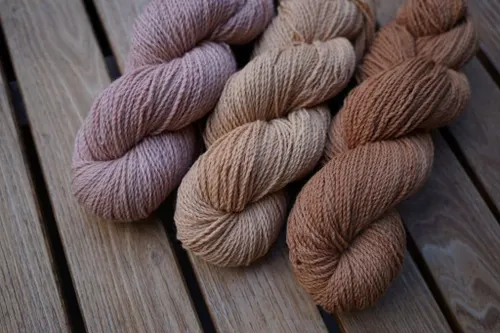
1. The Role of Tannins in MHRB
Tannins are naturally occurring biomolecules found throughout the inner root bark of Mimosa tenuiflora. In natural dye chemistry, tannins act as structural anchor points.
- The Built-In Advantage: Because MHRB is naturally rich in tannins, protein fibers (like wool and silk) can readily accept a baseline level of color even without an added metal salt. Violet Dye Co
- The Limitation: While you can achieve color in a tannin-only bath, untreated results are often softer, more muted, and less wash-fast over time. Introducing a proper mordant creates covalent bonds between the fiber, the tannin, and the pigment, locking in washfastness and depth. Violet Dye Co+ 1
2. Choosing Your Mordants: How Chemistry Shifts the Palette
A mordant is a metallic salt that binds the dye molecules to the textile fibers (derived from the Latin mordere, meaning “to bite”). Changing your mordant completely transforms what your MHRB dye bath produces:
Violet Dye Co
- Alum (Potassium Aluminum Sulfate):
- The Effect: The gold standard for natural dyeing. Alum doesn’t radically distort the base hue; instead, it brightens, intensifies, and fixes the natural mauve, rose, and purple tones. Violet Dye Co
- Best For: Achieving clear, brilliant, repeatable purples and pinks, particularly on protein fibers like wool and silk. Violet Dye Co
- Iron (Ferrous Sulfate):
- The Effect: Iron acts as a “saddener,” reacting directly with the tannins in the MHRB to form deep iron-tannin complexes (the same chemistry found in iron-gall ink). It immediately pulls colors into smoky grays, charcoal purples, and near-black hues. Violet Dye Co+ 1
- Best For: Dramatic shade-shifting. Use sparingly (around 2% to 4% of dry fiber weight) either as a pre-mordant or a quick post-dye dip. Violet Dye Co
- Copper (Copper Sulfate):
- The Effect: Shifts the typical MHRB purples entirely toward earthy olives, muted teals, and green-gold undertones. Violet Dye Co
- Best For: Artisans looking to experiment outside the standard purple spectrum. (Note: Handle copper compounds with careful safety protocols).
3. Fiber Prep: Protein vs. Cellulose
The success of your mordant and tannin bond depends heavily on the fabric you choose:
- Protein Fibers (Wool, Silk, Alpaca): These animal-based fibers feature natural amino-acid bonding sites that eagerly accept both tannins and metal mordants. They require minimal coaxing and yield the most saturated, vibrant results from MHRB. Violet Dye Co+ 1
- Cellulose Fibers (Cotton, Linen, Hemp): Plant fibers have a neutral, inert chemical structure that resists natural dyes. To get rich results from MHRB on plant fibers, a tannin pre-treatment (such as a pre-soak in oak gall, sumac, or a dilute MHRB wash) is essential before applying an alum mordant. Violet Dye Co+ 1
4. Fine-Tuning with pH Modifiers
Beyond mordants, the pH level of your water bath acts as an independent color knob for MHRB flavonoids:
Violet Dye Co
- Acidic (Adding vinegar or citric acid): Shifts the dye bath toward warmer rose, burgundy, and crimson-tinged mauves. Violet Dye Co
- Alkaline (Adding a pinch of baking soda or washing soda): Shifts the visual spectrum toward cool blue-violets and deep indigos. Violet Dye Co
- Neutral: Renders the truest baseline purple-mauve profile. Violet Dye Co
Secure Premium Materials for Your Studio
To achieve professional, repeatable results in botanical research or textile arts, starting with pure, unadulterated inner root bark is non-negotiable.
Explore our professional-grade inventory—featuring ultra-fine cold-milled powders and premium whole inner root bark—at Prime Hostilis, where sustainability, purity, and scientific integrity guide every batch.